- Swingly
- Posts
- Oil Explodes. Volatility Back. Structure Still Holds
Oil Explodes. Volatility Back. Structure Still Holds


MARKET ANALYSIS
Here’s All You Need To Know
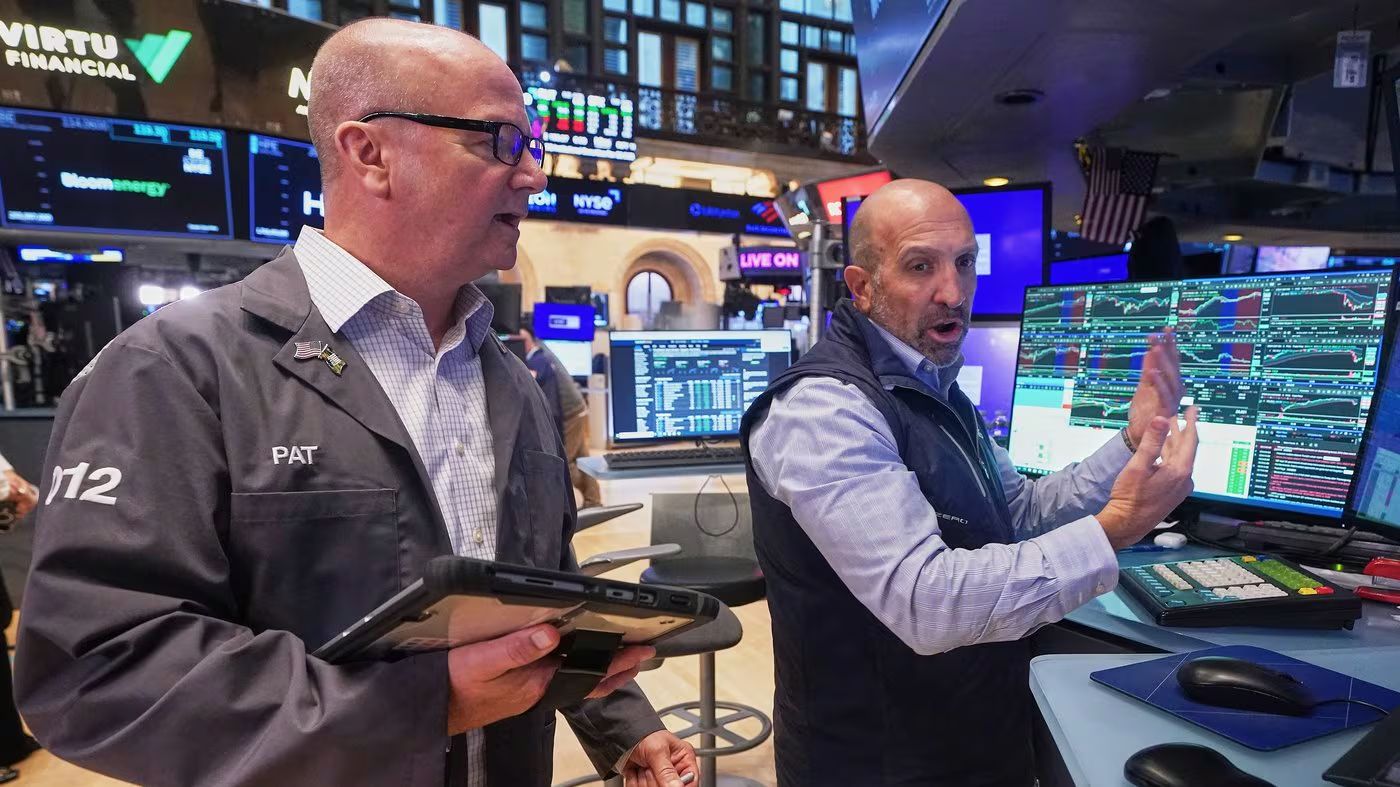
Futures are lower again this morning as oil extends higher, which means the market is now pricing duration rather than just a one-session shock response.
The key transmission channel is energy. Sustained upside in crude increases inflation risk at the margin and tightens financial conditions, which is why equity futures are reacting more meaningfully this morning than they did into yesterday’s close.
The difference between yesterday and today is simple: yesterday’s weakness was absorbed into key support. Today’s open will test whether that absorption continues.
The VIX remains elevated in the mid-20s, which reinforces that we are still in a higher-volatility regime. In this type of environment, timeframes compress and open-to-close behavior becomes significantly more important than intraday extremes.
The dollar is firm, energy is strong, and equities are heavy pre-market. That is a standard risk-off alignment, but it is not yet disorderly.
What matters most is how equities behave at the same support levels that held yesterday. If those levels are defended again on expanding relative volume, that confirms structural resilience. If they begin to fail on expanding participation, that is when risk increases materially.
The market is not in a confirmed breakdown phase. It is in a volatility-driven equilibrium phase, where demand continues to show up at lows and supply shows up at highs.
Nasdaq

QQQ VRVP Daily & Weekly Chart
53.46%: over 20 EMA | 52.47%: over 50 EMA | 51.48%: over 200 EMA
The QQQ defended the key demand level at 597.72 with authority, printing 130% relative volume as price reacted higher from that zone.
The session also saw a 25% expansion in average daily range versus its 20-day baseline, confirming that the reaction was not just a low-volume bounce but a meaningful volatility expansion at support.
This 597–600 area has held repeatedly since February 5, and yesterday’s defense reinforces that structural integrity remains intact for now.
The most impressive element was the behavior off the open. Pre-market weakness and peak fear were immediately absorbed, and price reversed higher rather than accelerating lower. That absorption of selling pressure is constructive.
However, we are still trading below the declining 20-week moving average, which continues to act as overhead resistance. The visible range volume profile shows dense supply clustered at current levels, including the point of control. This is not a clean breakout environment.
Expect continued volatility. A gap down at the open remains likely given macro uncertainty, and any early weakness must again be judged by the close, not the open.
The key takeaway is that demand continues to defend 600. That does not mean we aggressively deploy capital here. It simply means structure has not broken.

QQQE VRVP Daily & Weekly Chart
The equally weighted segment continues to outperform the cap-weighted index.
QQQE has been forming higher lows and higher highs since February 6, and yesterday it held both the 10-week and 20-week moving averages while consolidating above the daily and weekly point of control.
This confirms that strength inside the Nasdaq is broader than just the mega-cap complex, even though the Magnificent Seven continue to distort the headline index.
Breadth supports this view, with more than 50% of Nasdaq stocks holding above their 20-, 50-, and 200-day moving averages. Yesterday’s selloff did not produce widespread technical damage beneath the surface.
S&P 400 Midcap

MDY VRVP Daily & Weekly Chart
48.75%: over 20 EMA | 53.75%: over 50 EMA | 64.00%: over 200 EMA
The mid-caps delivered one of the most impressive recoveries. MDY opened sharply lower at 647.43 and immediately reversed higher by roughly 2%, representing a 40% expansion versus its average daily range.
Relative volume printed 176%, signaling strong participation at the rising 20-day moving average.
On the weekly structure, the bounce also aligned with support at the rising 10-week moving average, reinforcing the confluence of daily and intermediate trend support.
Breadth deterioration in mid-caps was minimal, with roughly 50–64% of stocks still holding above their 20-day and 200-day moving averages.
The message here is consistent: weakness is being bought. That does not mean trend continuation is confirmed. It means sellers are not gaining control.
This is currently a range-bound, volatility-driven market. Swing trades are more difficult. Intraday trading has been cleaner. Traders should either shorten timeframes or reduce exposure.
Russell 2000

IWM VRVP Daily & Weekly Chart
46.25%: over 20 EMA | 50.67%: over 50 EMA | 61.75%: over 200 EMA
Small caps were initially pressured but staged a meaningful recovery into the close.
The IWM printed a 2.63% intraday range, approximately 63% greater than its average daily range, on 142% relative volume. That is significant volatility expansion at support.
Price briefly undercut the rising 50-day moving average for the first time since November 2025 before recovering decisively. That undercut-and-reclaim pattern is constructive.
While only about 46% of Russell stocks remain above their 20-day moving averages, the close showed strong recovery, and internal deterioration was not extreme.
Expect volatility to persist. Intraday weakness should not be mistaken for structural breakdown unless confirmed by weak closes.
This remains a market where supply shows up near highs and demand shows up near lows. That dynamic favors range trading rather than aggressive trend positioning.
FOCUSED STOCK
UEC: A Very Strong Uranium Pullback Play

UEC VRVP Daily & Weekly Chart
ADR%: 7.67% | Off 52-week high: -23.0% | Above 52-week low: +306.8%
Uranium Energy Corp. is testing a critical demand level at the rising 20-week moving average near 14.50.
This level aligns with a prior supply zone from late 2025 that has flipped to demand, and it has now produced more than six consecutive successful support tests.
Relative volume has declined aggressively during the recent pullback, indicating that participation is not expanding on the selloff. That absence of distribution is constructive.
Yesterday’s defense of the 20-week moving average occurred as uranium itself continues to expand structurally, reinforcing the thematic strength in the underlying commodity.
With uranium in breakout mode and UEC consolidating constructively at long-term support, this test of the rising 20-week moving average presents a technically viable area to look for exposure, provided the level continues to hold on a closing basis.

Did you find value in today's publication?This helps us better design our content for our readers |
Reply